Hummingbirds are among the most extraordinary birds in the world, admired for their vibrant colors, rapid wingbeats, and remarkable agility. Belonging to the family Trochilidae, these tiny creatures are native to the Americas and are found from Alaska to the southern tip of South America, with the greatest diversity in tropical regions.
Physical Characteristics
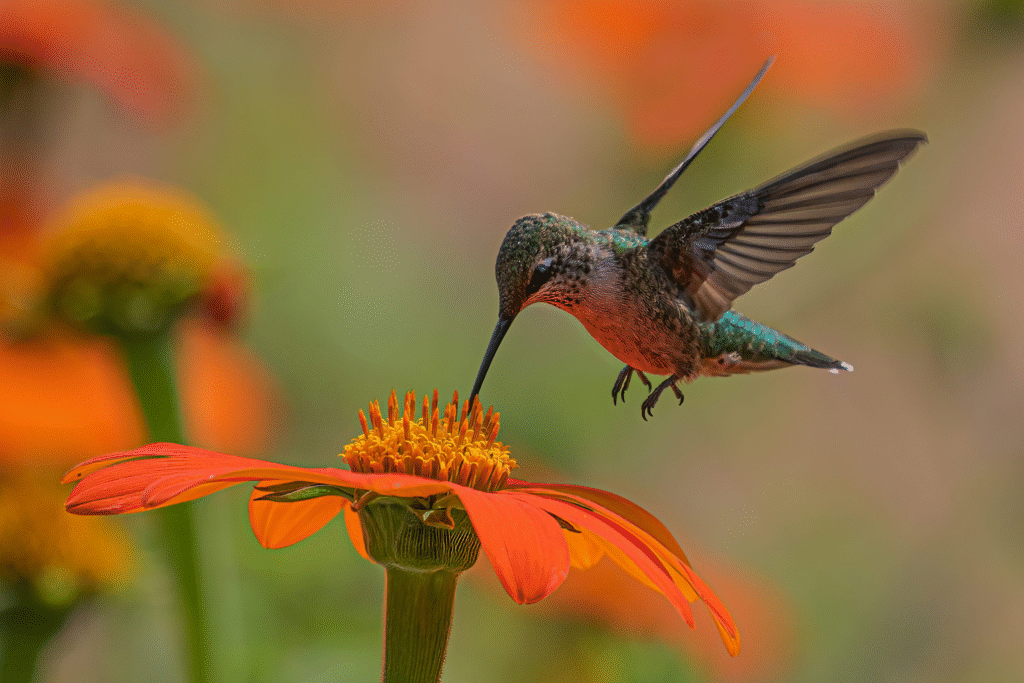
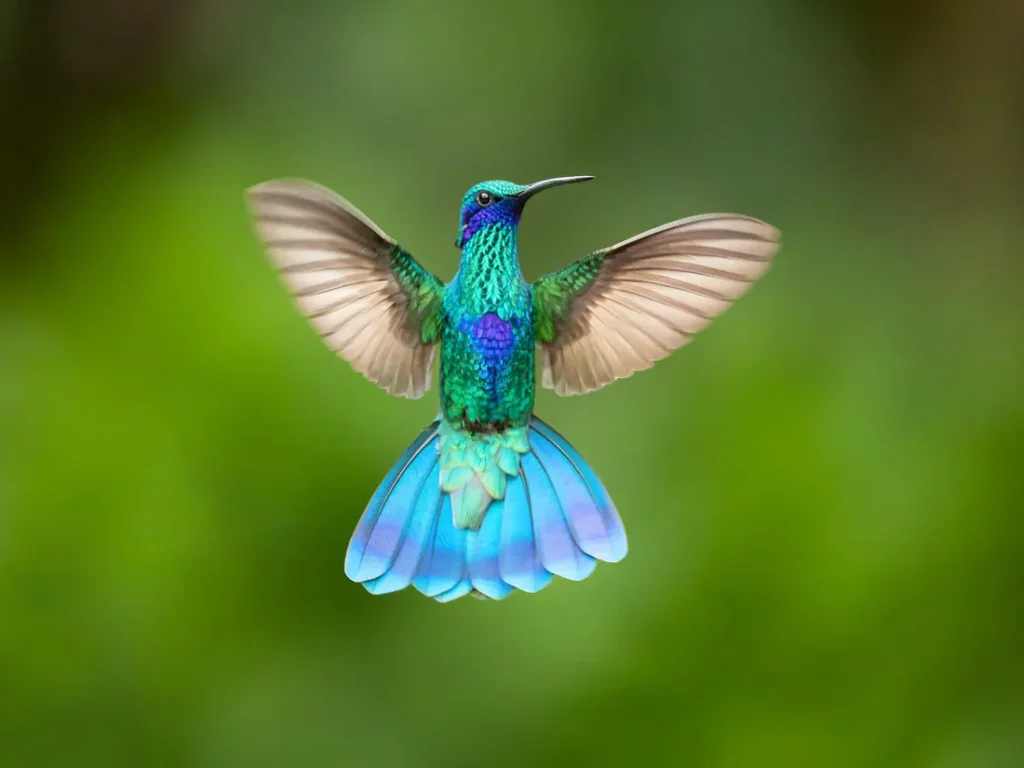
Hummingbirds are known for their small size, ranging from 7.5 cm to 13 cm in length, with some species weighing less than a coin. Their most distinctive feature is their wings, which beat incredibly fast—up to 70–80 times per second in some species. This allows them to hover in mid-air, fly backwards, and change direction with precision, making them unique among birds.
Their feathers often shimmer with iridescent colors due to the microscopic structure of their plumage, not pigments. Depending on how light strikes their feathers, hummingbirds can appear to glow with brilliant greens, blues, and reds.
Feeding Habits
Hummingbirds have a very high metabolism and feed frequently throughout the day. Their primary diet consists of nectar from flowers, which provides the energy needed to sustain their rapid wing movements. They also consume small insects and spiders, which provide essential proteins. With long, slender beaks and specialized tongues, hummingbirds are perfectly adapted for sipping nectar deep inside flowers.
Interestingly, their relationship with flowers is mutual: while feeding, hummingbirds transfer pollen, aiding in the pollination of many plant species.
Behavior and Migration
Despite their delicate appearance, hummingbirds are fiercely territorial and will aggressively defend their feeding areas from intruders.
Many species also undertake incredible migratory journeys. For example, the Ruby-throated Hummingbird migrates up to 3,000 kilometers between North America and Central America, often crossing the Gulf of Mexico in a single nonstop flight.
Symbolism and Cultural Significance
Across cultures, hummingbirds symbolize joy, energy, resilience, and adaptability. In Native American traditions, they are often seen as healers or bringers of love and good fortune. Their ability to hover and move swiftly has made them a symbol of agility and tireless energy.
Conservation
While many hummingbird species thrive, some face threats due to habitat loss, climate change, and reduced availability of food sources. Planting native flowers, avoiding pesticides, and putting out nectar feeders are simple ways people can support hummingbirds in their regions.
Conclusion
Hummingbirds are living jewels of nature—small in size but mighty in spirit. Their beauty, speed, and resilience continue to inspire awe and admiration. Protecting their habitats ensures that future generations will also enjoy the sight of these glittering, fast-flying wonders.