1. Introduction
Hidden beneath Alaska’s icy forests and tundra lies one of the world’s most extraordinary survivors — the Alaskan Wood Frog (Lithobates sylvaticus). Unlike most creatures, this small amphibian endures months of freezing temperatures by literally turning to ice and returning to life when spring arrives. It’s a real-life miracle of nature and one of Alaska’s most inspiring wildlife stories.
2. Appearance and Identification
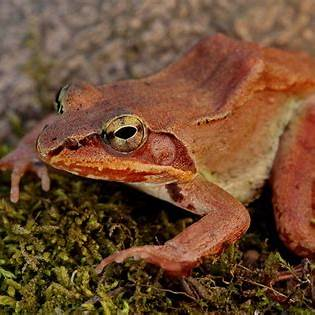
The Alaskan Wood Frog is small, sturdy, and built for cold weather. Adult frogs grow between 4 to 8 centimeters, making them modest in size but tough in spirit.
- Color: Their color can range from earthy browns to rusty reds or olive greens, helping them blend into forest floors and leaf litter.
- Markings: A dark “mask” stretches from the eye to the eardrum, and many have a pale stripe running along their upper lip.
- Texture: The skin is smooth but slightly moist, essential for breathing through their skin.
Males are generally smaller than females and develop rough patches on their thumbs during breeding season.
3. Where They Live
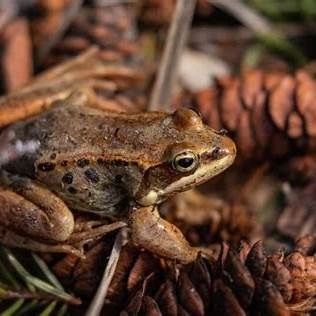
These frogs are found all across Alaska, even beyond the Arctic Circle — a place where few amphibians can survive. They prefer living in moist forests, tundra wetlands, and shallow ponds. During warmer months, they wander through grassy meadows and forest edges, but when it’s time to breed, they always return to calm, fish-free pools.
4. The Miracle of Freezing and Thawing
What truly makes the Alaskan Wood Frog legendary is its ability to freeze solid during winter. When temperatures drop below zero, these frogs crawl under fallen leaves or moss and allow ice to form inside their bodies. Their hearts stop beating, lungs stop working, and they appear lifeless.
Yet they survive.
How? Their livers flood their blood and tissues with glucose and urea, natural antifreeze compounds that protect their cells from ice damage. This allows up to 65% of their body water to freeze without harm.
As the snow melts in spring, the frogs thaw from the inside out, their hearts begin to beat again, and within hours, they hop away as if nothing happened. Scientists are studying this process to learn how humans might one day preserve organs or tissues through freezing.
5. Breeding and Life Cycle
Once the frost retreats, male frogs are the first to wake and head to nearby ponds. Their short, duck-like calls echo across the wetlands, inviting females to join. Females lay hundreds to thousands of eggs in jelly-like clusters that float on the water’s surface.
Tadpoles hatch within a few weeks and grow quickly, transforming into young frogs by midsummer before the ponds dry or freeze. Most live 3 to 5 years, though many don’t survive their first winter due to predators or environmental challenges.
6. What They Eat
Alaskan Wood Frogs are opportunistic feeders.
- Adults feast on insects, spiders, beetles, and worms.
- Tadpoles graze on algae and decaying plant matter in shallow ponds.
Their diet helps maintain a balanced ecosystem by keeping insect populations in check.
7. Survival in Harsh Environments
These frogs can survive being frozen for over 200 days, enduring temperatures as low as –16°C (3°F). During that time, their metabolic activity drops to nearly zero. This adaptation allows them to thrive in northern habitats where no other frog species can survive year-round.
8. Importance and Conservation
Even though the Alaskan Wood Frog is listed as a species of Least Concern, it plays a vital role in Alaska’s ecosystems. They act as a food source for birds, snakes, and small mammals, while also helping control insect populations.
Threats like habitat loss, water pollution, and climate change could impact their future. As warming trends alter freeze-thaw cycles, scientists are closely watching how this affects their survival.
9. Why They Matter
Beyond their ecological role, Alaskan Wood Frogs hold clues to medical science. Their natural antifreeze chemistry could help scientists develop new methods for organ preservation, cryosurgery, and space biology. Nature’s smallest creatures often carry the biggest secrets — and this frog is living proof.
10. Conclusion
The Alaskan Wood Frog is a living example of resilience and adaptation. In a land where temperatures plunge far below freezing, this tiny amphibian doesn’t flee or hibernate — it freezes, waits, and returns to life. Its yearly cycle of death and revival is a true natural wonder, showing how life always finds a way, even in the coldest corners of our planet.