The Belted Kingfisher: A Bold Diver of North America
The Belted Kingfisher (Megaceryle alcyon) is one of the most striking birds found across rivers, lakes, and shorelines in North America. Its large head, spiky crest, and rattling call make it easy to recognize, even from a distance. Known for its fearless dives into water, the kingfisher has earned its reputation as a skilled hunter.
Distinctive Appearance
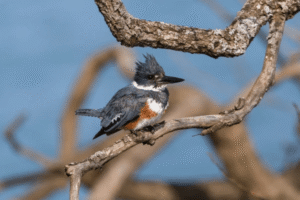
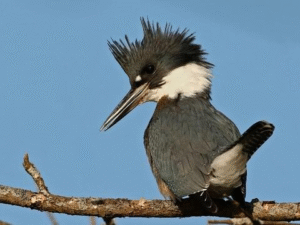
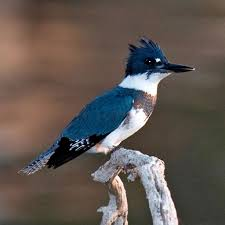
This bird is medium-sized with a stocky build and a powerful, heavy bill. Its feathers are a beautiful shade of slate-blue on the back and wings, with white underparts. The male has a single blue chest band, while the female—unlike most bird species—wears an additional rusty orange band across her belly, giving her brighter plumage than the male.
Master of the Hunt
The Belted Kingfisher hunts with precision. It often perches on branches, wires, or posts near water, watching patiently. Once it spots prey, it hovers briefly in the air before plunging headfirst into the water. Fish make up the bulk of its diet, but it also eats crayfish, insects, and the occasional amphibian. Its sharp eyesight and strong bill allow it to capture slippery prey with ease.
Unusual Nesting Strategy
Unlike many birds that nest in trees, the kingfisher prefers to dig burrows into riverbanks or sandy slopes. These tunnels, which may stretch several feet, slope slightly upward to prevent flooding. At the tunnel’s end, the birds create a nesting chamber where the female lays eggs. Both parents share the responsibility of feeding and caring for the chicks.
Where They Live
Belted Kingfishers are found across most of North America, often near clear lakes, winding rivers, ponds, and coastal waters. Their loud, mechanical rattle call is usually heard before they are seen darting across the sky. In colder months, many northern populations migrate southward into Central America and the Caribbean.
A Unique Female Trait
In most bird species, the males are the more colorful sex. The Belted Kingfisher is an exception. Females display brighter markings, with their extra rust-colored band, while males remain more simply marked. This role reversal makes them especially intriguing to birdwatchers and scientists.
Conservation and Importance
Currently, the species is considered stable and not threatened, though clean water and healthy riverbanks are crucial for their survival. Pollution, habitat loss, and climate changes could impact their populations over time. Protecting freshwater ecosystems helps not only kingfishers but countless other species as well.
Fascinating Facts
- Kingfishers have existed for thousands of years, with fossil evidence proving their ancient presence.
- Juvenile kingfishers have special stomach linings that later peel away to expel fish bones and scales.
- Their rattling call often echoes long before the bird itself is spotted near the water.
🌊 Conclusion
The Belted Kingfisher is more than just a bird—it is a symbol of thriving waterways. With its dramatic dives, unusual nesting habits, and striking plumage, it represents the wild spirit of North America’s rivers and lakes. Protecting their habitats ensures that future generations will continue to enjoy the sight and sound of this fearless fisher.